Finding labourer work in Cameroon: where should you start?

Looking for labourer work in Cameroon? Start with tasks you can perform, areas you can reach and your availability. Even an urgent advert needs checking: knowing where to go, what work is expected and under which terms helps avoid wasted journeys.
Here is a simple approach with sample messages and two Kamerjob adverts. Application templates are fictional: adapt them to your circumstances.
1. Choose tasks matching your level
A labourer may support a team with site preparation, tidying, material handling or other assigned tasks. Some adverts concern construction, others agricultural work or a specific short assignment.
List what you have actually done: assisting a mason, cleaning a work area, moving materials with appropriate equipment or supporting a site team. State which work was supervised. Do not present yourself as a mason, steel fixer or equipment operator if you do not have those skills.
2. Search Kamerjob and read the full advert
Browse labourer vacancies on Kamerjob. Also try titles matching your goal, such as “aide-maçon” or “apprenti carreleur”. Check the town, neighbourhood, tasks, date and contact channel. Confirm availability before travelling.
Example: an assignment in Logbessou
The masons and labourer advert in Logbessou, Douala distinguished the roles and advertised FCFA 3,500 per day for the labourer. It mentioned boots, a helmet, a high-visibility vest and an identity document copy. Hours and duration were not specified.
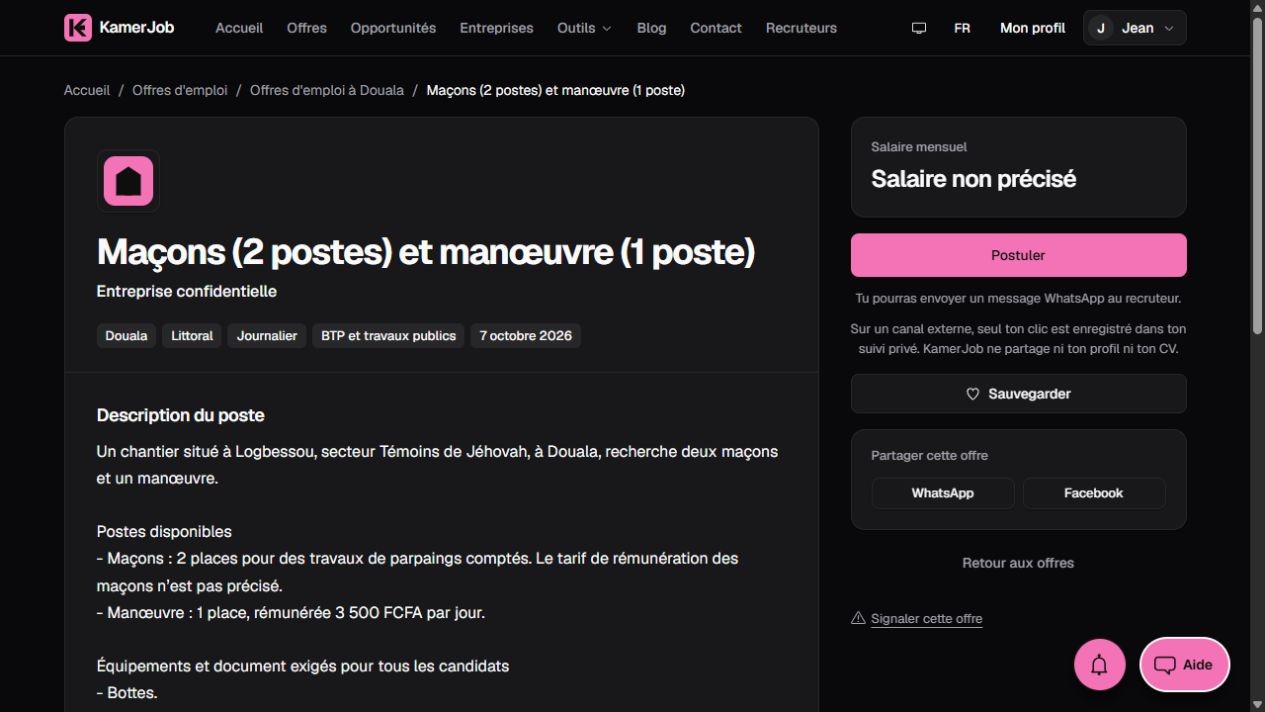
Screenshot taken on 18 October 2026, in French. The amount belongs to this advert, not a standard rate. Availability needs confirmation; the text specified no deadline.
A useful question: “Is the position still available? What are the hours, duration and payment timing? Who supplies the necessary equipment?” Clarify advertised requirements without treating them as rules for every site.
Example: learning a trade in Yaoundé
The tiling assistant/apprentice advert sought someone motivated to learn, preferably living near Fougerolles or Éleveur. It illustrates another option: regular work aimed at developing a trade.
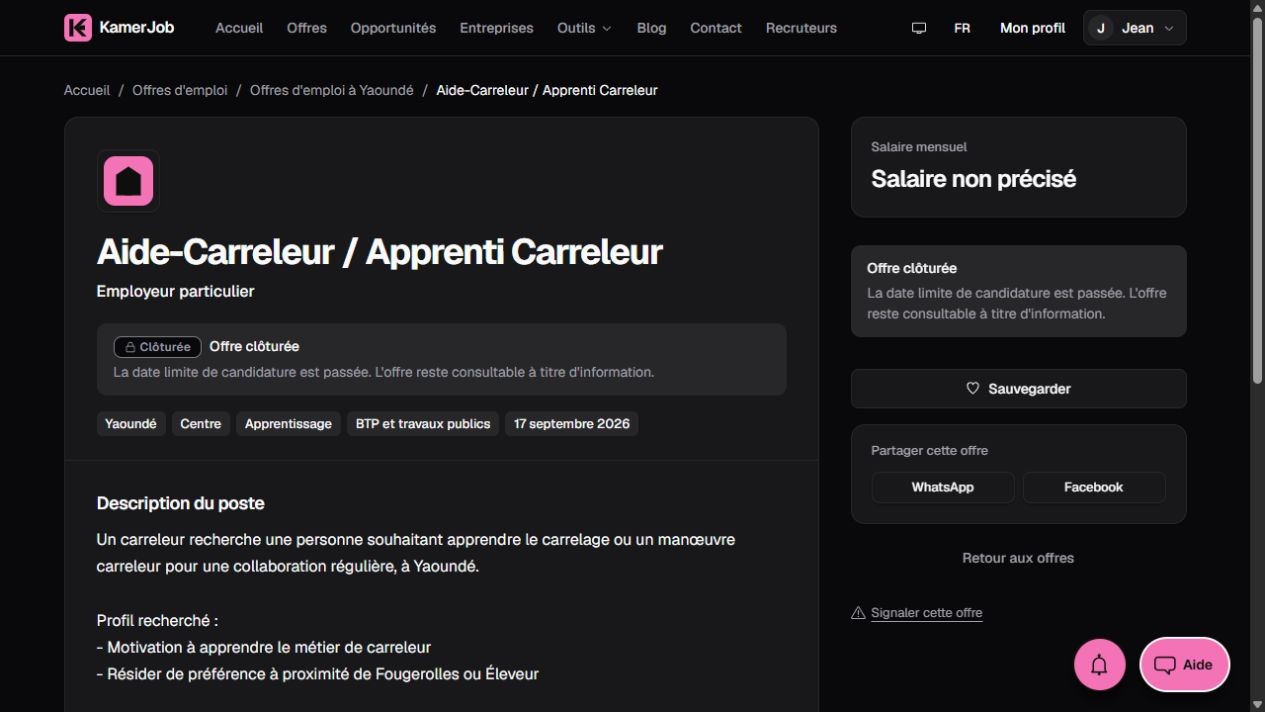
Screenshot taken on 18 October 2026, in French. This advert was closed; it is an example rather than an open vacancy.
3. Prepare a short introduction
Keep your name, reachable number, neighbourhood, availability and a few actual tasks ready. If a CV is requested, use a simple document presenting those details and real experience. Do not invent qualifications or employers.
“My name is [name] and I live in [area]. I have helped on [type of site] with [actual tasks]. I am available from [date]. I would like labourer work and am ready to follow the team’s instructions.”
If starting out, say so: “I am a beginner seeking suitable work with instructions and supervision.” Only name a referee with their permission.
4. Send a precise message before travelling
“Hello, I saw your labourer vacancy in [location] on Kamerjob. Is it still available? I live in [area] and am available [date]. I have experience with [tasks]. Could you confirm the exact location, meeting time and working conditions? Thank you.”
Use the specified contact channel. If terms are explained verbally, write them down and request confirmation of key points. Do not post an identity document copy in a public group; verify the recipient and need for the document. Do not pay for a recruitment promise.
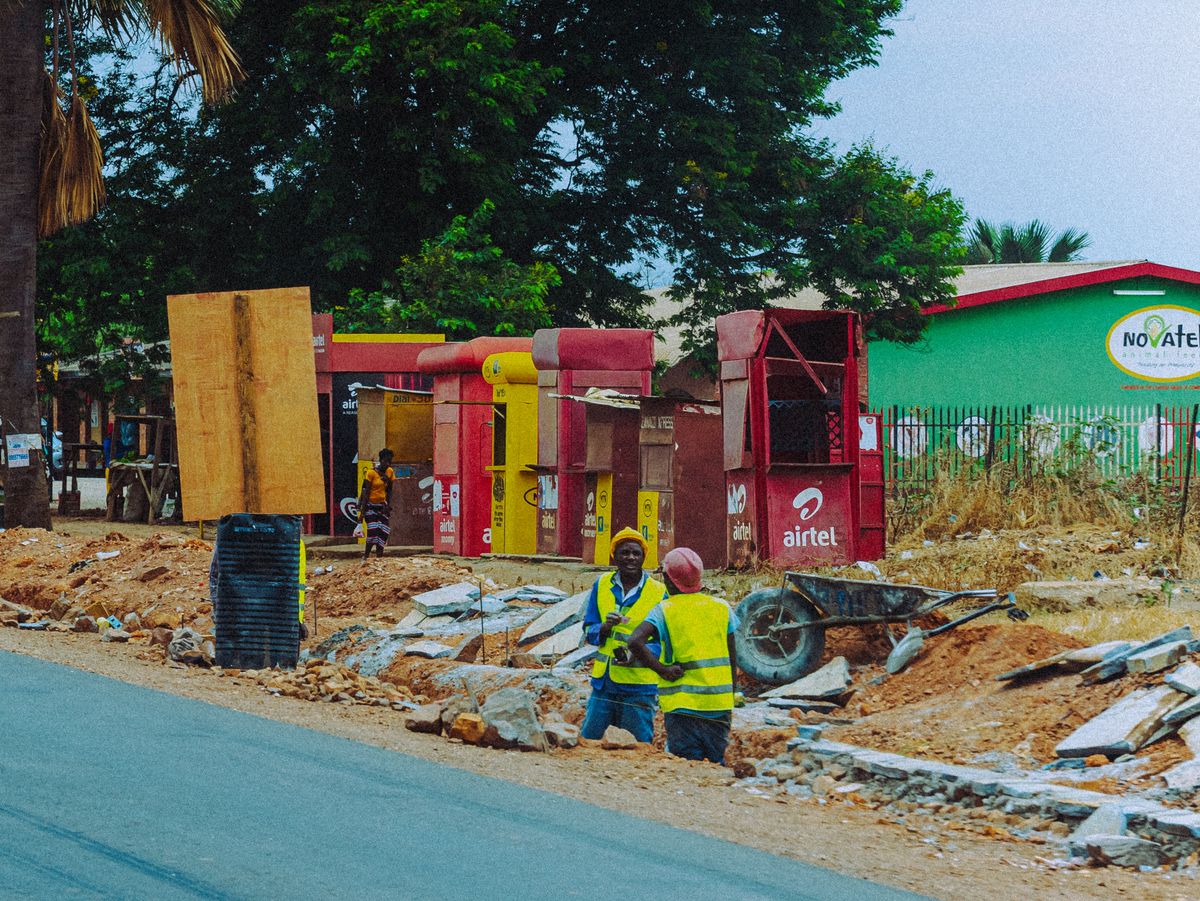
Illustrative photo: Malama Mushitu / Pexels.
5. Clarify work, payment and equipment
- Which tasks will you perform, and who supervises them?
- What is the exact address and expected assignment length?
- What are the hours, breaks and arrangements if work stops?
- What pay is agreed, when and how will it be paid?
- Who supplies suitable tools, equipment and instructions?
Consider transport and meal expenses too. A daily amount alone does not show what will remain after your costs. Record days and hours worked and keep confirmations and payment evidence.
Before starting, ask for site induction and instructions. Explain any task you do not know and request appropriate supervision. Do not use machinery or specialist equipment without suitable qualifications and authorisation.
6. Plan the next steps in your search
Record adverts contacted, replies and confirmed dates. For short assignments, ask about the expected end date to plan the next opportunity. After a site assignment, note tasks learned and, if the work went well, ask whether the supervisor agrees to be a referee.
To develop a trade, ask about training, supervision and apprenticeship terms. The title “apprentice” alone does not explain pay or the learning programme: ask questions.
Read also: preparing a CV without formal qualifications or experience and finding work with your phone.
Cover: This Viktọ / Pexels. Stock photos are unrelated to the recruiters or example candidates.
The Kamerjob team
Comments
Loading comments…