Recruitment driving assessment: how to prepare

Has a recruiter proposed a driving assessment? First ask what will be evaluated, which vehicle will be used and under what conditions. Preparation should demonstrate skills suited to the job, understood instructions and the ability to explain your limits.
A recruitment assessment does not replace the required licence or specialist training. The examples below are fictional, not an employer’s official assessment programme or a driving instruction course.
1. Confirm arrangements before the appointment
Ask about the location, duration, vehicle, route type, accompanying assessor and criteria. Clarify required documents, vehicle use and insurance arrangements, and any expenses or payment for the assessment.
“To prepare, could you specify the vehicle, duration, supervision and assessment points? Will this only be an evaluation, or will it include actual work duties?”
Check that your licence and qualifications match the vehicle. Do not accept an assessment using equipment you are not authorised or trained to operate. Verify the recruiter before sending personal documents.
2. Review the vacancy’s responsibilities
Relevant skills vary by role. The KM International truck driver advert in Kribi mentioned a category CE licence, delivery notes, journey logs and reporting faults.
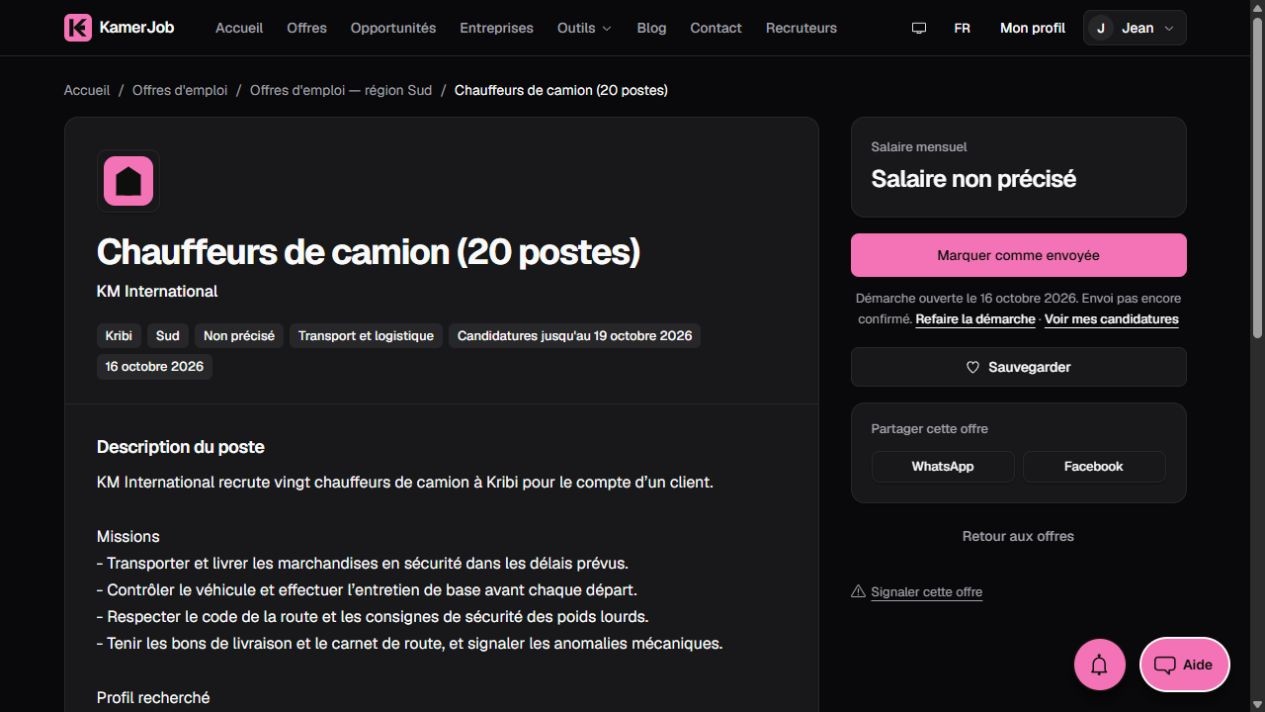
Screenshot taken on 18 October 2026, in French. Displayed deadline: 19 October 2026. Check the current status. The advert illustrates job skills, not the content of an assessment.
The older Tim Hills Cameroon delivery driver advert in Douala described routes, delivery documents and routine vehicle care. These tasks can guide preparation, but only the recruiter can confirm their assessment criteria.
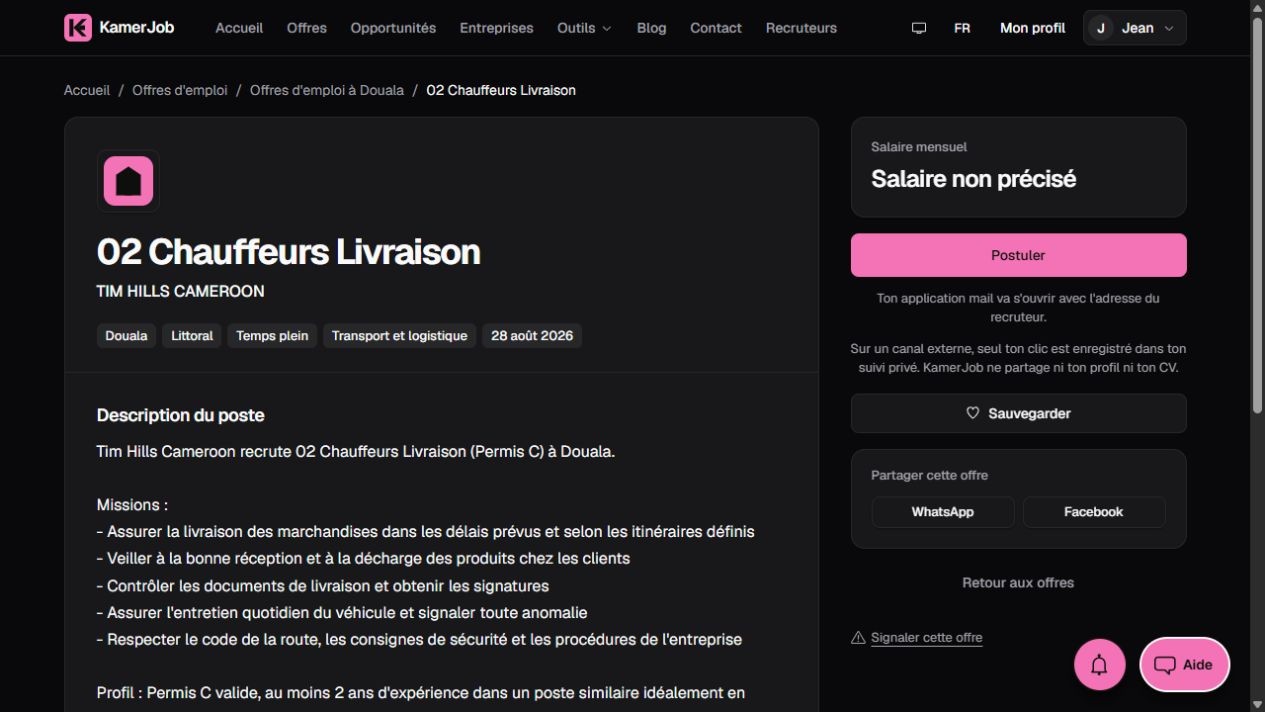
Screenshot taken on 18 October 2026, in French, used for learning rather than guaranteeing an open vacancy.
3. Prepare your documents and introduction
Check your licence and validity, then prepare the CV and requested evidence. Keep control of original documents. Plan your journey to the appointment and arrive rested, wearing suitable clothing.
Prepare a short introduction: “I have driven [vehicles] in [setting], covering [areas]. I can perform [actual tasks]. I have not used [equipment] yet and would like to understand the support planned.”
If a driving skill needs improvement, practise within an appropriate training setting with the necessary authorisation and supervision. Do not practise on unfamiliar equipment simply to pass the appointment.
4. Understand the vehicle and instructions before starting
Ask for an introduction if the model is unfamiliar. Carry out checks covered by your training and the assessor’s instructions. Report an issue rather than downplaying it to appear confident.
Clarify ambiguous instructions before acting. Use phones and navigation only while safely stationary. Follow traffic rules; a recruiter’s instruction does not justify a dangerous manoeuvre.
“I would like to confirm the requested stopping point before continuing.”
“This equipment is unfamiliar: could you explain the controls within the agreed assessment?”
If equipment is beyond your qualifications, a brief explanation does not replace training. Ask to reconsider the assessment arrangements instead of claiming competence.
5. Demonstrate clear communication
The recruiter may want to understand how you follow instructions and report difficulties. Stay factual, courteous and attentive. If you make a mistake, respond safely as appropriate and listen to feedback rather than hiding it.
Fictional situation: “The requested route was unclear. I asked for clarification at a safe moment instead of improvising a destination.”
For trucks, buses, forklifts or machinery, vehicle and site procedures matter. Do not automatically transfer private-car habits to another type of equipment.

Illustrative photo: cottonbro studio / Pexels.
6. Distinguish assessment from a working day
If the assessment turns into deliveries, customer transport or an extended assignment, clarify scope, responsibilities, hours and payment arrangements before committing. Calling it a “test” does not explain those terms.
At the end, ask about observations, skills to improve and the next stage. Record lessons without photographing or distributing company documents or private information.
“Thank you for the assessment. Which points should I improve, and when should I expect feedback on my application?”
Prepare your driver interview and CV. Credible preparation rests on actual skills, understood instructions and clear assessment arrangements.
Cover: cottonbro studio / Pexels. Stock photos: the people pictured are not involved in the recruitment or examples cited.
The Kamerjob team
Comments
Loading comments…