TikTok trends: how to choose the right ones for a brand

A video keeps appearing in your TikTok feed. Should a company copy its sound, staging or joke? Before filming, ask a simple question: what will this format help the audience understand or do? A trend can serve a brand when it fits its customers, message and resources.
Here is a selection method for content creators, community managers and small businesses in Cameroon. The scenarios below are fictional examples of formats, not claims about what is currently viral.
1. Start with the brand’s need
Write one sentence covering the audience, message and intended action. For example: “Help customers of a Douala shop choose their size and check availability.” You can then assess ideas against that objective.
A trend might be a sound, edit, storytelling structure, recurring question or gesture. You can adapt a narrative structure while creating your own footage and words. Reproducing another creator’s entire video or work is not a brand strategy.
Brief to adapt: “Our audience is [audience]. They should remember [message]. After the video, we want them to [action]. Our tone is [tone], and we can produce with [resources].”
Clarify who approves the information, filming and publication. A trend that needs lengthy explanation may not be the best starting point.
2. Research beyond your personal feed
Your feed is not a survey of all customers. Examine several examples, their dates and comments. Do viewers understand the format? Are they discussing the topic or only the music? Does the language and cultural context suit your intended audience?
TikTok Creative Center offers inspiration resources. Depending on available data and filters, its Trends section provides information on hashtags and trends. Observations from another market do not establish popularity in Cameroon.
Record the link, date, format mechanism and an adaptation idea. Separate observations from assumptions. Avoid promising reach or treating a sound as a permanently successful formula.
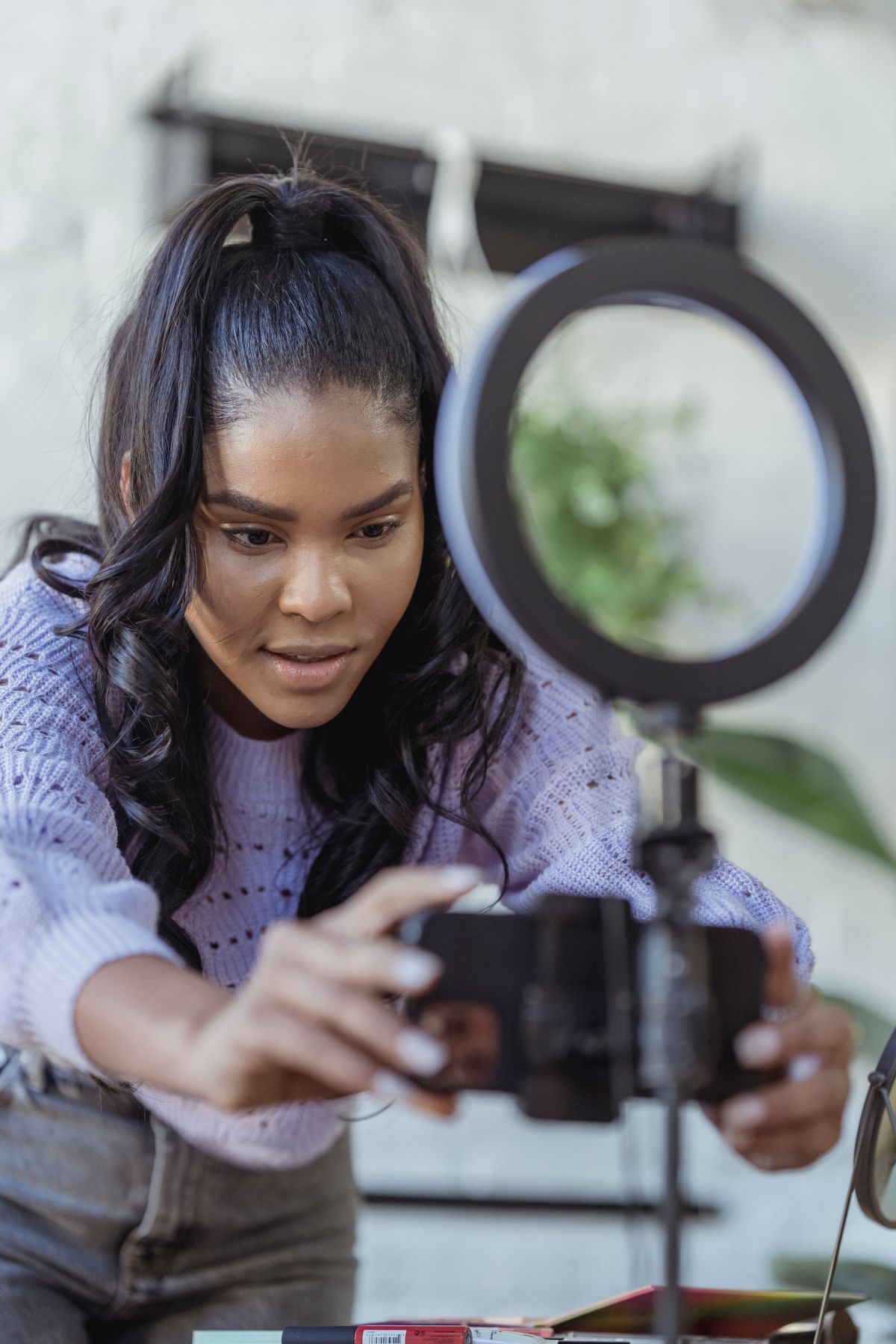
Preparing the message before filming helps you choose a workable format. Illustrative photo: George Milton / Pexels.
3. Assess the trend with five questions
- Audience: will the intended viewers understand the reference and language?
- Message: can you explain the connection to the product or service in one sentence?
- Tone: does the video fit how the brand wants to speak to customers?
- Feasibility: can you produce it well with the available time, equipment and people?
- Use: do you have the necessary permissions for footage, people and sounds, and are the claims checked?
Then decide whether to use the format, adapt it or reject it. A creative idea does not resolve uncertain permission. A format that humiliates a customer, reveals a private conversation or requires an unsupported claim should be dropped or rewritten.
For audio, TikTok recommends its Commercial Music Library for content promoting a brand, product or service. Check the track’s conditions for the intended use. Availability does not mean unrestricted permission to reuse it across every platform.
Also consult TikTok’s commercial content disclosure guidance and apply the settings appropriate to your post. Do not try to bypass requirements simply by changing account type.
4. Three examples: adapt rather than copy
A clothing shop in Douala
Potential format: a before-and-after transformation. Adaptation: show two ways to wear one item, followed by available sizes. Avoid: promising the same outcome for every body type or mocking a customer. Action: invite viewers to check availability through the usual channel.
A restaurant in Yaoundé
Potential format: a short behind-the-scenes sequence. Adaptation: follow the preparation of a dish actually offered, with participants’ agreement. Avoid: unconfirmed prices or opening hours, or disrupting kitchen work. Action: consult the menu or ordering information.
A business service
Potential format: “one misconception, one explanation”. Adaptation: answer a common question with a demonstration using fictional data. Avoid: showing customer files or promising unmeasured gains. Action: request a demonstration relevant to the viewer’s needs.
Proposal for a manager: “I suggest [format] to explain [message] to [audience]. We will create our own footage. Filming needs [resources], approval comes from [person], and we will observe [indicator]. If the sound is unsuitable for commercial use, we will use original speech or an authorised alternative.”
5. Test and explain what you learnt
Choose a measure linked to the objective: understanding reflected in comments, shares, profile visits or enquiries. Define the observation period and disclose paid promotion. More views alone do not establish more sales.
Compare content that is as similar as possible and record differences in topic, audience, length or distribution. Two videos cannot prove that the format alone caused a result. Use observations to plan another test.
Exercise: find three formats, answer the five questions for each and select one idea. Write a short script, shot list and approval request. Add the case to your portfolio, distinguishing personal work, proposals and actual commissioned projects.
To present this approach to an employer, see our TikTok creator skills guide, with examples of Kamerjob vacancies. In the job listings, examine content creation and community management duties: explaining your decisions can complement filming and editing skills.
For your next proposal: identify an audience, useful message, suitable format, verified permissions and tracking method. You will be able to justify the idea beyond “everyone is doing it”.
Official TikTok sources consulted on 18 October 2026: Creative Center and the linked help pages. Features and conditions may change. Illustrative photos: Christina Morillo / Pexels (cover) and George Milton / Pexels. The people pictured are not presented as Kamerjob employees.
The Kamerjob team
Comments
Loading comments…