Driver jobs with an NGO: how to prepare your application

Would you like to work as a driver with an NGO in Cameroon? Prepare an application that demonstrates driving skills and the ability to follow organisational procedures: approved journeys, vehicle records, vehicle monitoring and communication with the supervisor.
Each NGO sets its own requirements. Two Kamerjob adverts illustrate how to identify them. Both were closed when checked on 18 October 2026: they are learning examples, not invitations to apply to currently open recruitment.
1. Read duties and applicant requirements separately
FAIRMED: driving, courier work and local knowledge
The FAIRMED Driver-Courier advert in Abong-Mbang combined staff transport, documents and equipment, mail collection and routine vehicle care. It mentioned a valid licence, category B minimum, knowledge of the East Region and desirable professional driving experience.
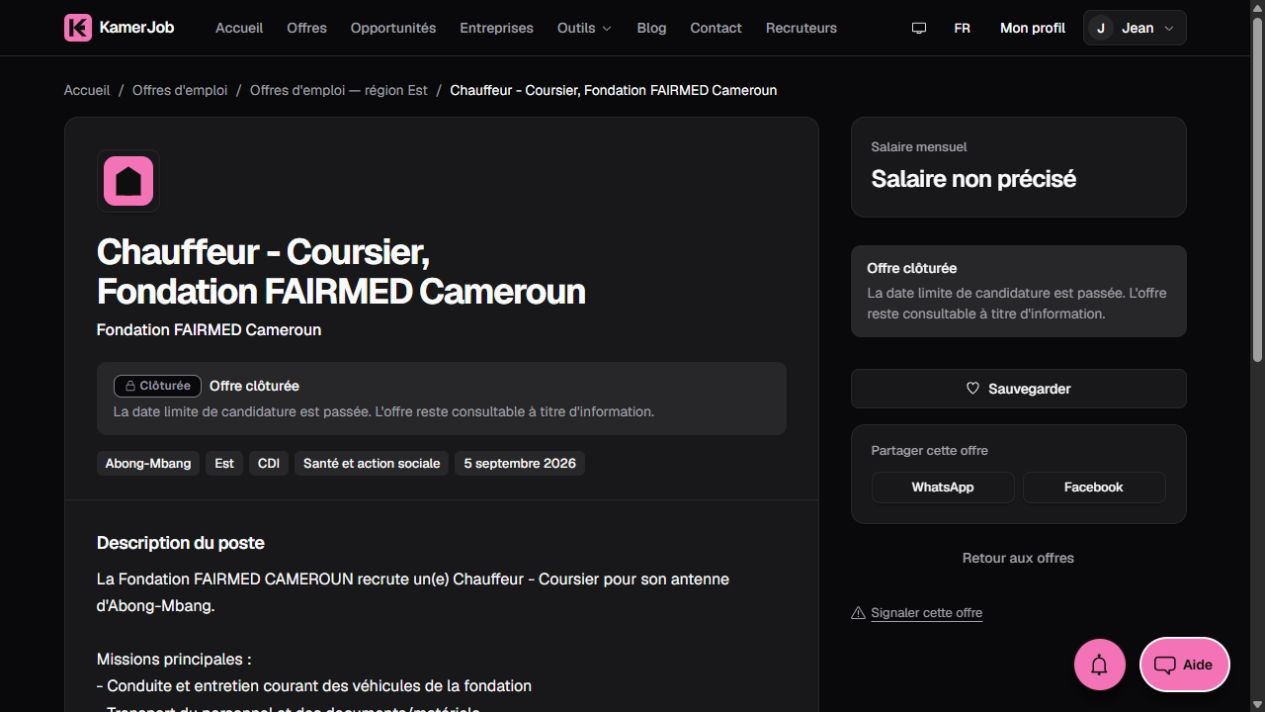
Screenshot taken on 18 October 2026, in French. “Offre clôturée” distinguishes an archived advert from available recruitment.
IRC: journeys, vehicle logs and procedures
The IRC Casual Drivers Yaoundé advert specified supervisor-approved journeys, vehicle logs, fuel records and reporting faults. The profile included off-road driving experience, fluent French or English and at least a CEPE. NGO experience was an advantage; it should not be treated as a universal requirement across all NGOs.
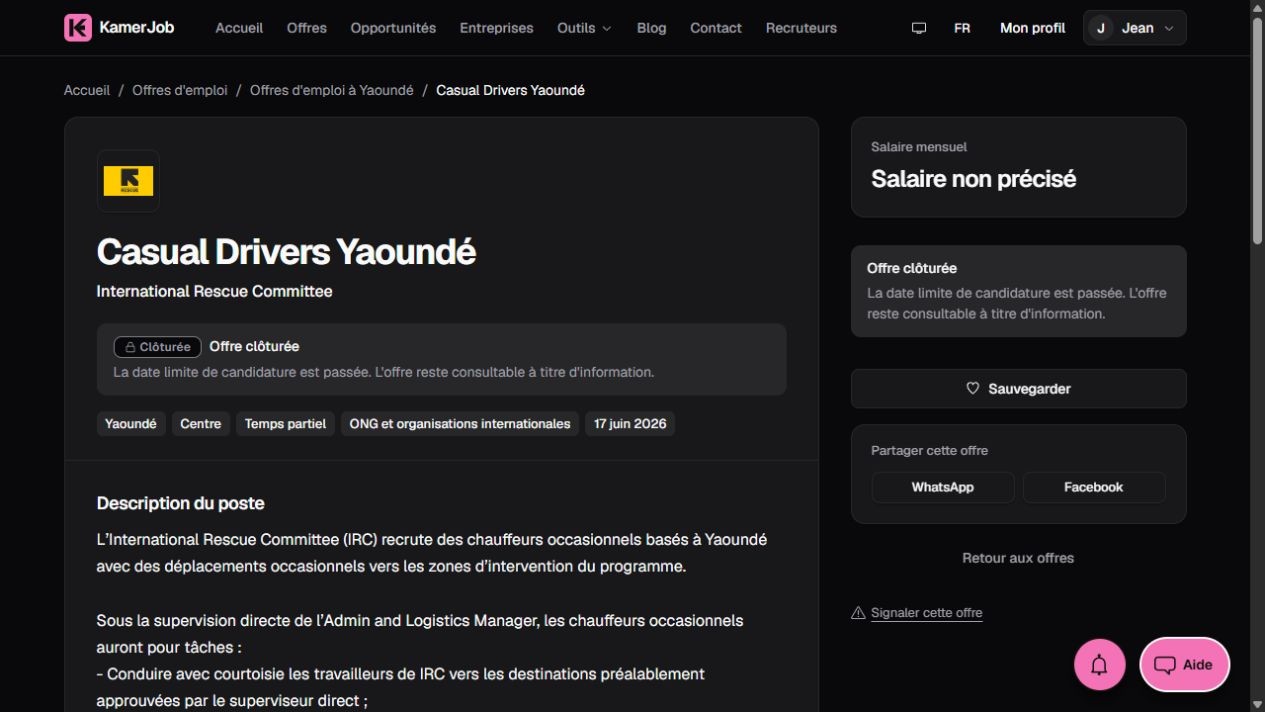
Screenshot taken on 18 October 2026, in the French interface. Read the linked advert for the detailed applicant profile.
2. Check how your background matches
Make two lists: mandatory conditions and desirable advantages. Check the licence, vehicles, travel areas, experience, languages and any educational requirement. A condition belongs to its particular advert; do not assume it applies to every organisation.
If a vehicle or area is unfamiliar, explain your actual level. City driving does not establish off-road competence. Ask about training and assessment before committing.
3. Tailor your CV to the responsibilities
Put your town, contact details, licence category and validity near the title. Then describe vehicles, routes and duties with consistent dates. Distinguish employment, occasional assignments and family driving.
“Driver — [setting], [dates]. Transported [people or equipment] across [areas actually known]. Maintained vehicle logs [if performed], tracked fuel receipts and reported faults. Coordinated journeys with [supervisor role].”
This template is fictional. Remove tasks you have not performed and only add verifiable volumes or distances. List languages at your actual level and training with its title, provider and date.
4. Explain your motivation through facts
Learn about the organisation’s work through its official channels. Explain your contribution without claiming humanitarian experience you do not have.
“I am applying for the [job title] position. My experience in [setting] helped me develop [skill] and [skill]. I know [area] and am available for [journeys you genuinely accept]. I would like to support your activities through organised transport and careful adherence to instructions.”
Follow the required email subject, form and supporting document instructions. The older FAIRMED advert required a specific subject line: this illustrates the importance of following each advert, rather than reusing that subject for another application.
5. Prepare two interview situations
Fictional examples to replace with your own experience:
“A destination changed before departure. I requested confirmation from the designated supervisor and waited for the approved instruction before changing the route.”
“A fault was observed during checks. I described the facts, informed the supervisor and followed the procedure without improvising repairs beyond my skills.”
Also prepare an example of document tracking or a supported expense. Describe your action and the observed outcome. Protect information about beneficiaries, teams and movements; do not publish it as evidence of experience.
Illustrative photo: cottonbro studio / Pexels.
6. Verify recruitment and clarify the terms
Check the deadline and application channel. Verify contacts through the NGO’s official channels and do not pay for a promise of employment. Send personal documents only when necessary through a verified channel. Obtain referees’ permission before sharing their details.
Before accepting, clarify the duty station, mission frequency, working hours and rest, expenses, contract and pay. Ask about movement and reporting procedures, induction and any practical driving assessment. “Casual driver” also needs clarification about actual work frequency and payment arrangements.
Browse Kamerjob vacancies and prepare your CV and interview. A credible application shows your skills, limits and ability to follow the position’s procedures.
Cover: cottonbro studio / Pexels. Stock photos are not affiliated with the cited NGOs; the people pictured are not the example candidates.
The Kamerjob team
Comments
Loading comments…