Driver in Cameroon: how to negotiate your salary and working conditions

Has an employer offered you a driver position and asked for your salary expectations? Before naming a figure, clarify the vehicle, duties, schedule and travel. Compare pay with responsibilities and the costs you would actually bear.
The calculations and figures below are fictional: they illustrate a discussion rather than a Cameroon salary guide or legal minimum.
1. Understand what the position includes
Personal driver, delivery driver, bus driver, truck driver and NGO driver roles differ. Ask whether duties include handling goods, administrative errands, collecting payments, paperwork or overnight travel.
The KM International truck driver advert in Kribi mentioned delivery notes and journey logs without specifying pay, hours or the contract. Missing information calls for questions.
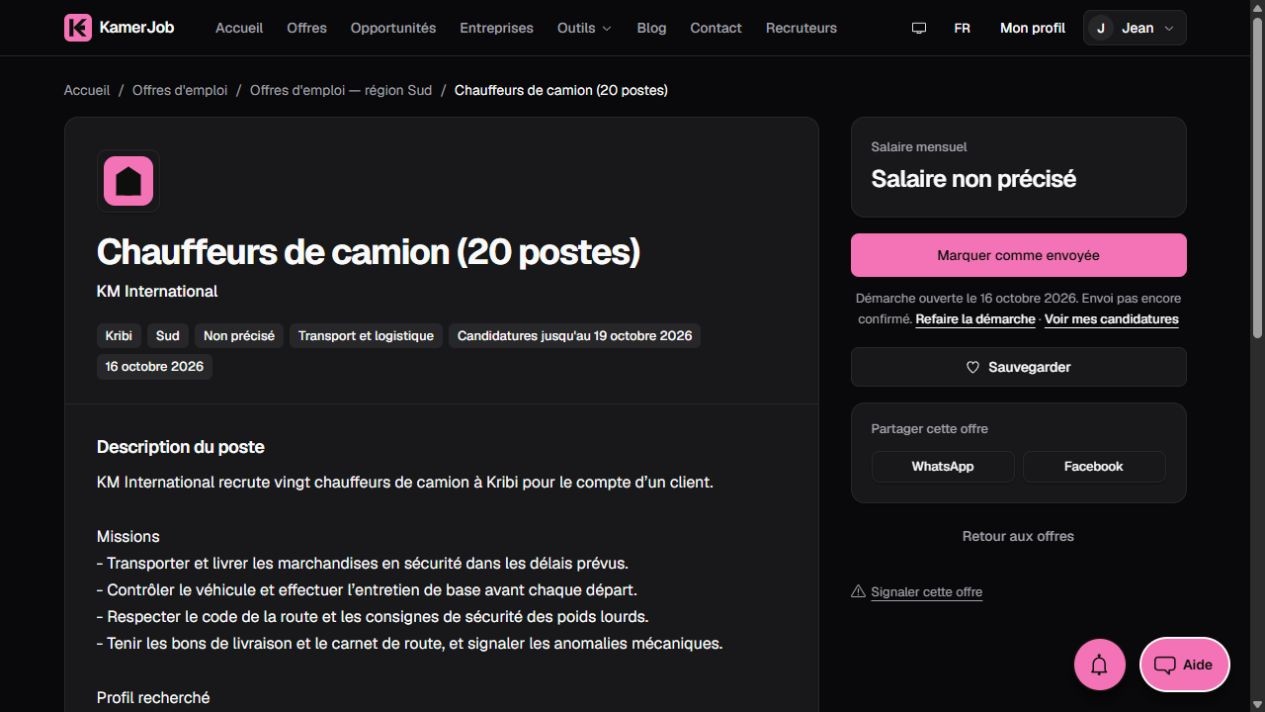
Screenshot taken on 18 October 2026, in French. Displayed deadline: 19 October 2026. Check the current status.
The older FAIRMED driver-courier advert in Abong-Mbang combined driving, mail and routine vehicle care. It shows why all duties matter, beyond the title.
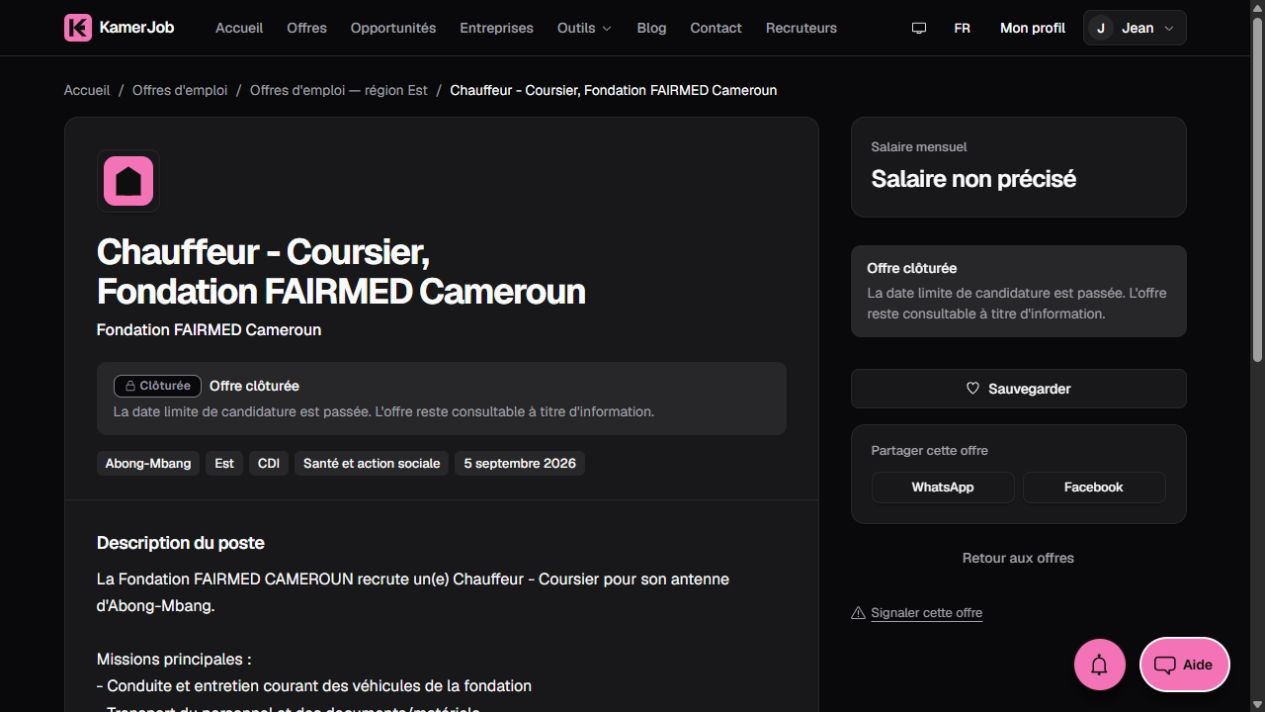
Screenshot taken on 18 October 2026, in French. Closed advert used to illustrate responsibilities, not available recruitment.
2. Prepare a reasoned request
Identify two or three strengths you can demonstrate: vehicle experience, route knowledge, paperwork, passenger service or travel assignments. Compare several roles with similar locations, duties and schedules; one advert does not establish occupational pay.
Set a target and personal acceptance threshold based on expenses. That threshold does not replace applicable rights and minimum pay. You can first ask: “What range have you budgeted for this role, and for which schedule?”
“Given my experience with [vehicle or assignment] and responsibility for [tasks], I would like to discuss pay of [amount], specifying gross or net. What flexibility is there in the offer?”
3. Separate salary, bonuses and work expenses
Ask whether pay is gross or net, which deductions apply, the payment date and records provided. Separate fixed salary from conditional bonuses and reimbursements for fuel, tolls, parking, meals or accommodation during assignments.
Fictional example: FCFA 150,000 net with FCFA 30,000 in monthly personal commuting costs leaves FCFA 120,000 after that cost alone. FCFA 140,000 net with FCFA 10,000 commuting costs leaves FCFA 130,000. This partial calculation is not enough to decide: compare hours, other expenses and benefits actually provided.
A fuel advance for the vehicle is not your pay. For taxi or ride-hailing work, takings handed over to the owner are not your salary either. First clarify the arrangement and allocation of expenses.
4. Discuss working conditions alongside pay
- What days, hours, breaks, waiting periods and rest are planned?
- How are schedule changes and additional hours recorded and treated under applicable rules?
- Which journeys and overnight stays are expected, with what expenses and advances?
- Who arranges maintenance, insurance suited to the activity and incident handling?
- Who gives instructions and approves spending?
Do not promise permanent availability to obtain higher pay. Ask how late assignments or vehicle downtime are handled. Delivery targets must remain consistent with safety.
For job classification, minimum pay or working-hour rules, check current legislation and any applicable collective agreement with the labour inspectorate. The Cameroon Labour Code listed by the ILO is a starting point to supplement with provisions relevant to your job.
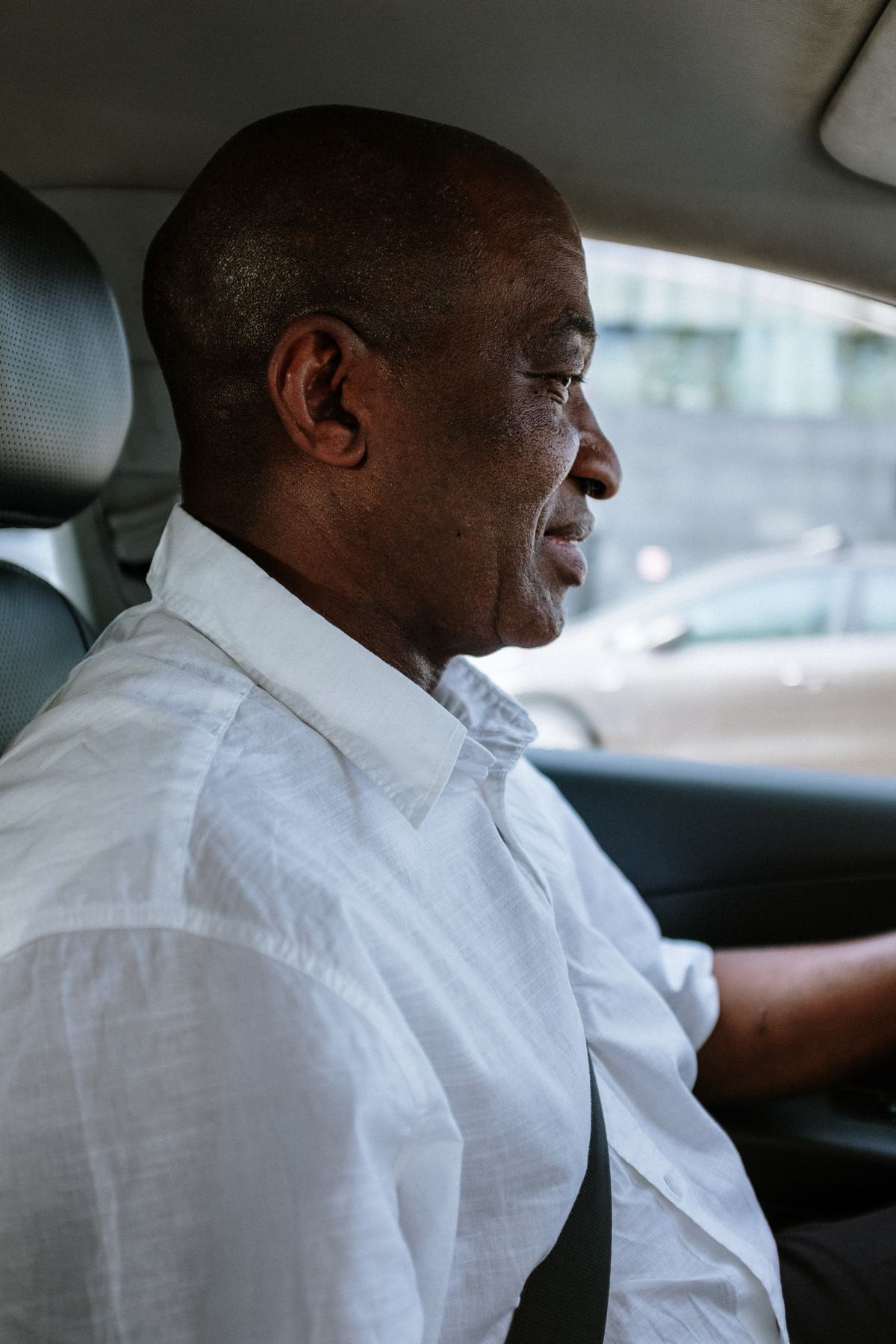
Illustrative photo: cottonbro studio / Pexels.
5. Respond to an insufficient offer
Fictional scenario, not a recommended rate:
“Thank you for offering FCFA 130,000 net. Considering the delivery and paperwork responsibilities, could you consider FCFA 150,000 net? I would also like to confirm the schedule and coverage of business travel expenses.”
If your target is unavailable, discuss a precise alternative: narrower duties, organised transport or a review on a defined date. A review does not guarantee a raise. Specify criteria and the decision-maker; if an increase is agreed, confirm its amount and effective date.
6. Confirm terms before starting
Request written confirmation of duties, pay, hours, rest, expenses and the start date. Clarify any practical trial and its payment arrangements before taking it.
“Thank you for our discussion. Could you confirm the [gross/net] salary, schedule [details], duties [summary], covered expenses and start date? I would like to resolve [remaining point] before starting.”
If declining, remain courteous: “Thank you for your offer. These terms do not match what I can accept at present.” Prepare your interview and read our guide to questions before taking a taxi or Yango vehicle.
Cover: snazzy Photography / Pexels. Stock photos unrelated to the employers or fictional scenarios.
The Kamerjob team
Comments
Loading comments…